
ABOUT SENEGALESE SABAR percussion
Sabar: The Sacred Percussion of Senegal
Sabar is one of the most sophisticated percussion traditions on earth. Rooted in the Wolof culture of Senegal, West Africa, sabar is the basis of Senegalese mbalax music. It is history, ceremony, healing, and celebration, carried in the hands of griots across generations.
At its core, sabar is a family of drums, each with its own voice, its own role, and its own name. Together they speak a language that Wolof communities have understood for centuries.
What Is a Sabar Drum?
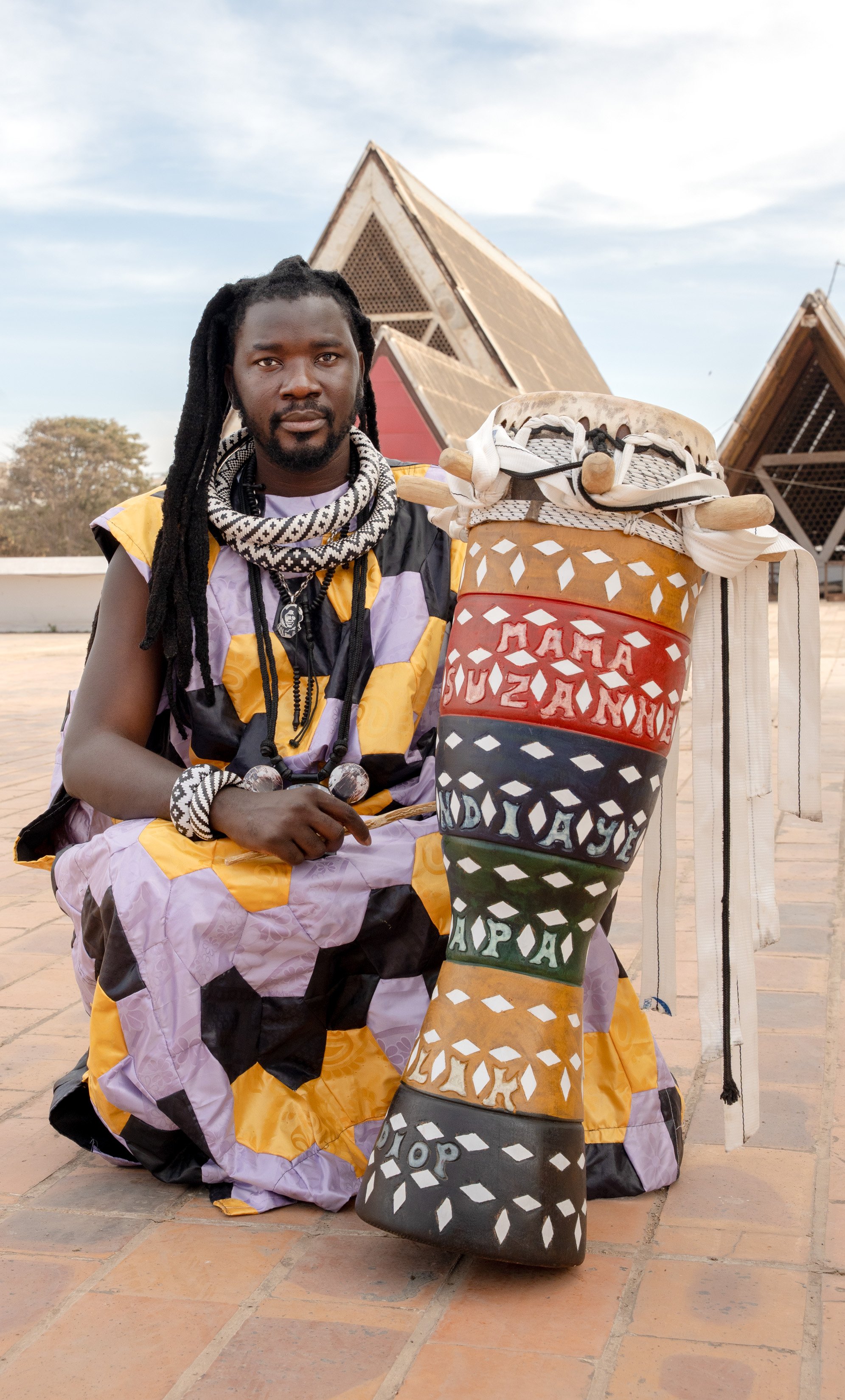
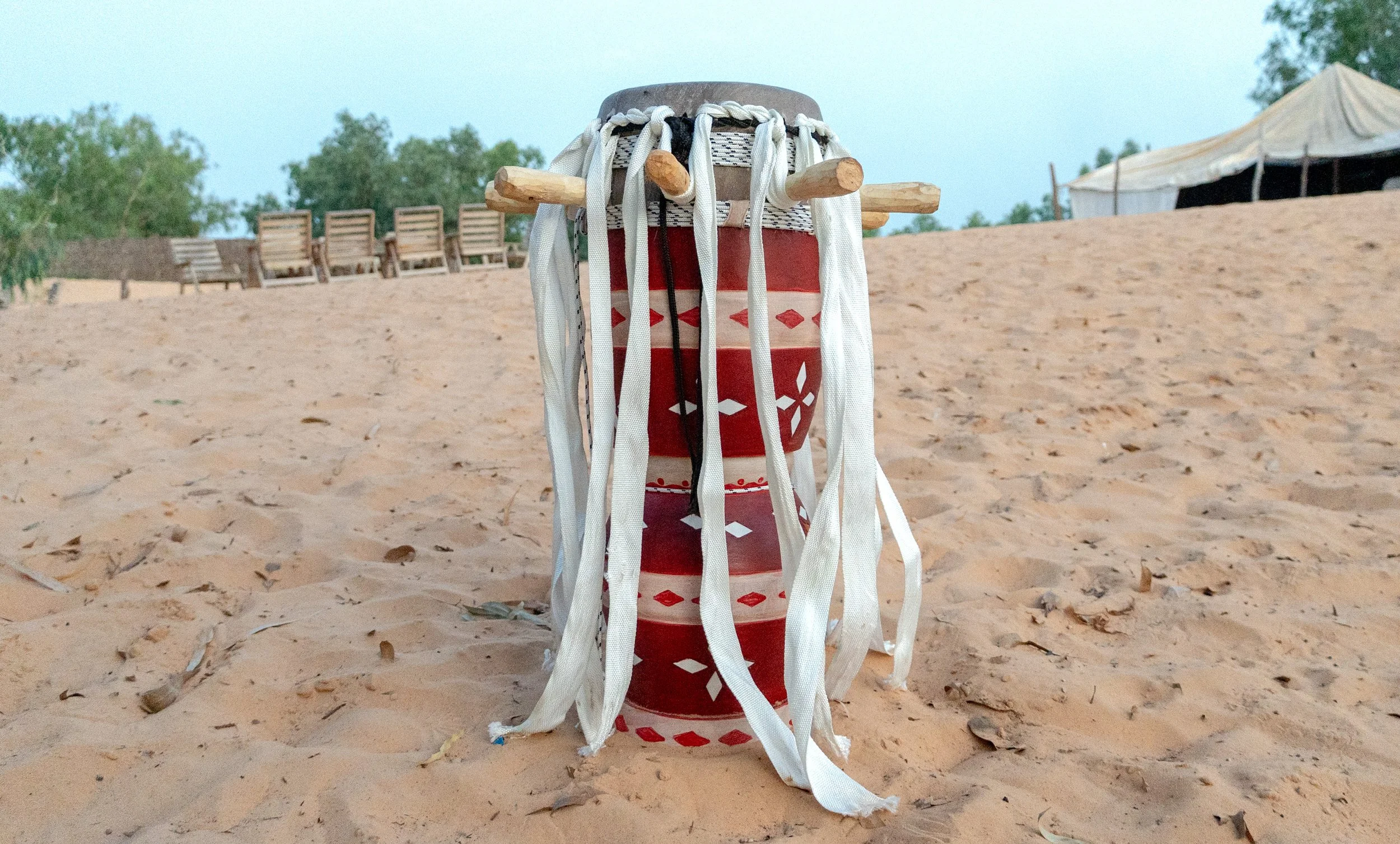
A sabar drum is a tall, narrow, single-headed drum carved from wood and covered with goatskin, held in place by tightly wound cord. Sabar is played with a combination of one bare hand and one thin stick, a technique that produces a wide range of tones, from deep bass to sharp, cracking highs.
A full sabar ensemble is made up of multiple drums of different sizes, each filling a specific role in the conversation. The largest drums anchor the rhythm; the smaller ones carry the melody and the breaks. Together they function like a spoken language, one that takes a lifetime to learn fluently.
The Sabar Family: Key Drums
Mbeng mbeng: A medium-to-large size drum, the mbeng mbeng provides the bass foundation that grounds the ensemble.
Nder: A tall, mid-range drum that carries much of the melodic and rhythmic conversation. Central to the sabar sound.
Thiol: A tall, mid-range drum that carries much of the melodic and rhythmic conversation. Central to the sabar sound.
Tungoné: A smaller drum used for specific rhythmic patterns and accents.
Xiin — A smaller, deep drum with a bass sound, often connected to the Baye Falls, the Sufi mystics of Senegal.
Each drum is handcrafted by skilled artisans called Loabé in Senegal, often within families who have been building sabars for generations.
Sabar and the Griot Tradition
Sabar belongs to the griots, the hereditary poet-musicians of West Africa who have served as keepers of cultural memory for centuries. In Wolof society, griots are historians, musicians, praise singers, and spiritual intermediaries. Their knowledge is not written down. It is passed from hand to hand, from elder to child, through direct transmission.
Aba Diop was born into this lineage in Dakar, Senegal. His mother was a griot. His father was a griot. All of his grandparents were griots. The rhythms he plays are not learned from a book. They are inherited, and they carry centuries of meaning.
"My mother was griot. My father was griot. All of my grandparents were griots. They gave us a good education, a good attitude, and they showed us how to carry ourselves with kindness and respect. I put all of that into the rhythms." —Aba Diop
Sabar in Senegalese Life
Sabar is woven into daily life in Senegal. It is played at weddings, naming ceremonies, religious celebrations, and community gatherings. Certain rhythms are tied to specific occasions. Some call people to dance, some are used in healing, some honor the great Sufi brotherhoods of Senegal. To know sabar is to know the heartbeat of Wolof culture.
In popular music, sabar forms the rhythmic backbone of mbalax, Senegal's dominant popular genre, made famous internationally by Youssou N'Dour. In most global contexts sabar has remained in the background, as support for singers and accompaniment for dancers. Aba Diop & the Yermande Family is changing that, placing sabar at the front of the stage as a lead voice in contemporary global music.
"Our percussion heals. There are rhythms we use in ceremony. There are rhythms that create a feeling of peace, that bring joy, that lead people to the light. When you hear our sabar, you forget your problems. That's the power we carry." —Aba Diop
How a Sabar Is Made
A sabar begins with carved wood, shaped to the specific dimensions of each drum type. The head is made from goatskin, stretched and secured with a cord network that runs the length of the drum. The tension of the cord determines the pitch and tone. Adjusting it is both a technical and intuitive art.
The craftsmen who make sabars in Senegal are specialists. The best instruments come from makers who have spent their lives understanding the relationship between the wood, the skin, and the sound.
Sabar and the Yermande Family
Aba Diop & the Yermande Family was built on the foundation of the sabar. Both albums, Revolution Sabar recorded in Senegal, and Family recorded between Dakar and upstate New York, place sabar at the center as a lead voice in dialogue with kora, tama, bass, guitar, and keys.
If you have never heard sabar played at full power, there is no substitute for experiencing it live.